
Voice cloning is quietly changing the way independent podcasters think about ownership — not after they sign the agreement, but never, because the question never comes up in the pitch.
Why podcasters are saying yes before they understand what they are agreeing to — the consent gap nobody is talking about
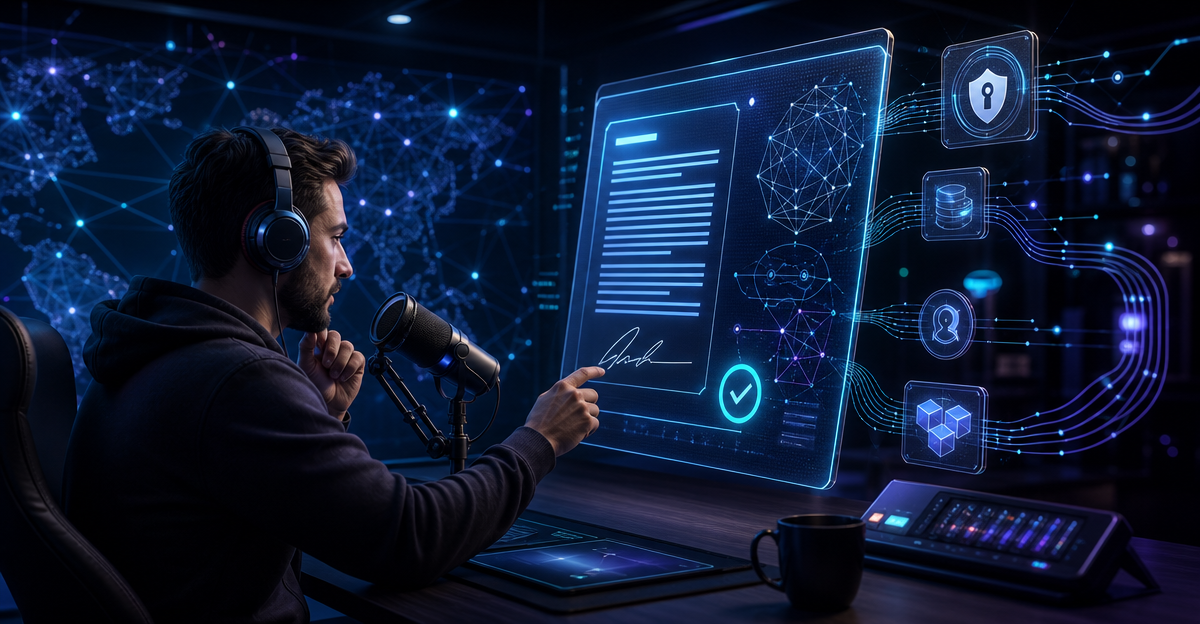
The pitch always arrives dressed as convenience. Your hosting platform sends an in-app notification, friendly copy, a single toggle: Enable AI Voice for automated episode summaries and multilingual reach. It takes eleven seconds to say yes.
What takes much longer — months, sometimes — is understanding that you just licensed your voice print to a platform whose terms of service allow them to use that asset in ways not yet invented. The language in most voice licensing agreements covers future use cases explicitly. You are not opting into a feature. You are signing a rights agreement.
The consent gap is structural, not accidental. Platforms surface the benefit first, the terms second, and the irreversibility never. Before you touch another platform toggle, open the full terms of service, search for the words voice data and sublicense, and read every sentence attached to those words before deciding anything.
What your voice actually is: why audio intimacy is the one creator asset AI cannot replicate but can absolutely dilute
Voice cloning can reproduce your cadence, your pronunciation patterns, even your characteristic pause before a sharp opinion. What it cannot reproduce is the listener’s knowledge that you chose to say it, at that moment, under those specific circumstances. That knowledge is the entire architecture of podcast trust.
Independent podcasters who built audiences over two to four years did it through consistent presence — the episode recorded while fighting a cold, the stumble mid-sentence that stayed in the edit, the audible shift in tone when a topic got personal. Those imperfections are not bugs. They are the signal that a human being is actually on the other side of the audio.
Audio intimacy is the one creator asset that does not survive duplication, because the moment listeners suspect your voice can exist without you, they start wondering when it already has.
The Spotify verified badge story reveals the real power shift — platforms now arbitrate authenticity, not creators
When Spotify introduced verification features for podcast accounts, the framing was protection — a way to help listeners identify legitimate shows. The structural consequence was something different: a platform now sat between a creator and their audience, deciding what counted as authentic enough to display publicly.
Voice cloning follows exactly the same logic. Once a platform holds a licensed copy of your voice and the technical infrastructure to deploy it, they determine which uses are permissible, which are promotional, and which generate revenue they are not obligated to share. You become a vendor of raw material inside someone else’s supply chain.
The practical implication here is specific: read any voice agreement you are offered with one question anchoring your attention — who has the right to use this voice asset if the platform is acquired by a company whose values you do not share? That scenario is not hypothetical. It is the standard trajectory of platform consolidation. See also our breakdown of what platform AI agreements actually mean for independent creators.
Three podcasters who tried voice cloning and what happened to listener trust six months later, not six days later
The pattern across independent podcasting communities shows a consistent arc. In the first weeks after enabling voice cloning for automated content — translated trailers, summary clips, between-episode touchpoints — engagement metrics hold steady or tick upward. The tool appears to be working.
By month three, a different signal starts appearing in listener reviews and DMs. Phrases like you feel more distant lately or I can’t explain it but something changed show up with enough frequency that it cannot be dismissed as individual taste. Listeners are detecting something. They cannot name voice cloning specifically, but they have identified that the texture of presence has shifted.
By month six, the podcasters who reported these patterns had made one of two decisions: they removed the cloned-voice touchpoints entirely and spent time explicitly reestablishing their presence, or they leaned further into automation and began repositioning their show as a content product rather than a personal relationship. Both are valid models. They are not the same model, and the voice cloning pitch does not tell you which one you are choosing.
How to make the actual decision: a framework that puts your audience relationship first, not your production schedule
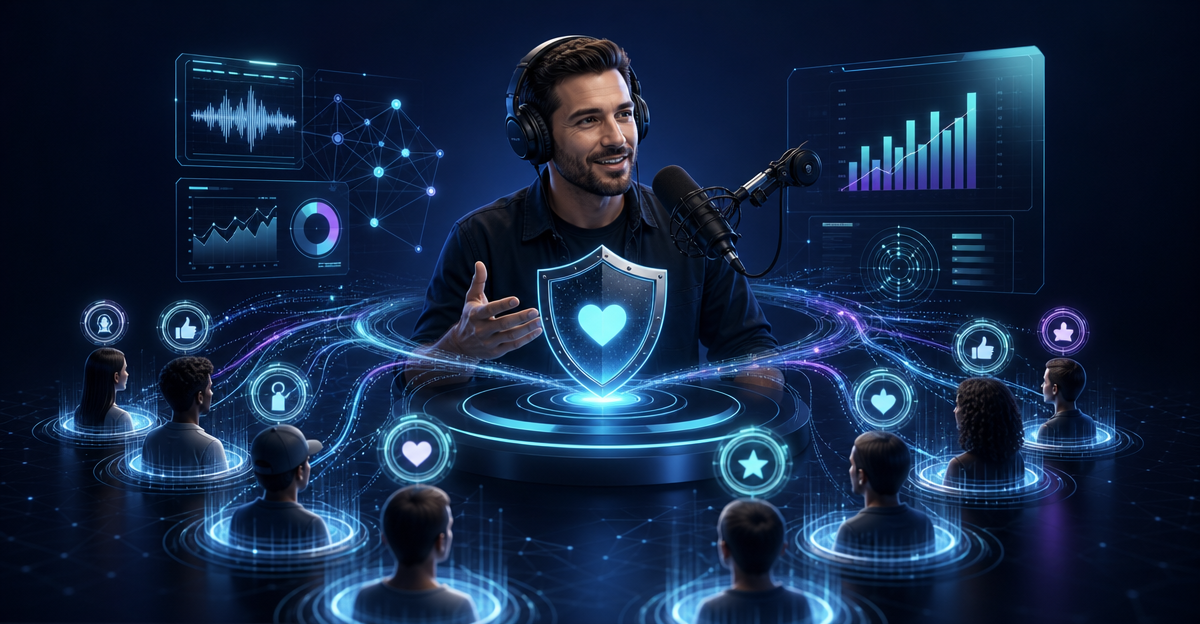
Before engaging with any voice cloning offer, write down the specific audience relationship you have built — not your download numbers, but the nature of the trust. Is your show built on the feeling that listeners know you personally? Is your voice the primary reason someone stays subscribed through a difficult episode topic? If the answer to either question is yes, you are not evaluating a productivity tool. You are evaluating whether to put that relationship at risk for a production efficiency you may not actually need.
Then ask the subtraction question that most tool reviews skip entirely: what would you remove from your current workflow before adding a voice cloning layer? If the real problem is post-production time, there are solutions that do not require licensing your voice. If the real problem is multilingual reach, there are translation approaches that use professional human voices with disclosed AI assistance. Voice cloning specifically solves the problem of deploying your voice without you being present — and that is only a solution if you have already decided your presence is optional.
The decision framework is three questions asked in order. First: does my audience trust depend on the certainty that I am always actually speaking? Second: have I read every clause in the platform’s voice licensing agreement, including future use rights? Third: am I solving a real production problem or accepting a feature because a platform made it frictionless to say yes? If you cannot answer all three with confidence, the right move is not a cautious yes. It is a deliberate pause until you can.