
Voice cloning is a legitimate workflow tool for a narrow slice of independent podcasters — and a slow-burning liability for everyone else who picks it up without a clear job for it to do.
That verdict took three months of production use and a lot of quiet conversations inside podcaster communities to arrive at. Launch-day reviews told you about the features. This piece tells you about the friction, the platform grey zones, and the one moment that turns listeners from fans into sceptics — usually episode four or five, not episode one.
Table of Contents
The actual use cases podcasters are running right now — and the one everyone overpromised
Which tools held up after 90 days of real production use and which ones got quietly dropped
Who should add this to their stack right now and who should wait another two product cycles
The actual use cases podcasters are running right now — and the one everyone overpromised
Voice cloning is being used productively in three specific scenarios right now: re-recording corrected lines without re-entering a studio, producing translated versions of existing episodes for Spanish or Portuguese markets, and generating short promotional clips from long-form source material. These are real, repeatable, and saving measurable time for podcasters who already have clean recording setups and consistent delivery.
The overpromised use case was batch episode production — the idea that a podcaster could clone their voice, feed in a script, and publish new episodes without ever sitting in front of a microphone. That workflow runs into a problem that no demo video showed: the emotional register of cloned voices is thin. Sentence-level accuracy is solid. Paragraph-level emotional arc is not. Listeners notice the flatness before they consciously name it.
The translation use case is the genuine surprise. Podcasters in the personal finance and self-development categories who pushed Spanish-language versions of existing episodes have reported meaningful audience growth in Latin American markets, without the cost of hiring bilingual hosts. That specific outcome is the closest thing to a clear win that voice cloning is currently delivering at this listener tier.
Why the double-edged sword metaphor is technically accurate but misses the more boring operational problem
Everyone writing about voice cloning reaches for the double-edged sword image — powerful but dangerous, useful but risky. That framing is not wrong. It is just not the problem that slows down most independent podcasters once they are actually inside the workflow. The real problem is file management and version control, and it is almost completely absent from the conversation.
When you are re-recording individual corrected lines with a cloned voice and splicing them into original recordings, you end up with a multi-generational audio file — some segments recorded live, some generated, some edited from earlier generated takes. Tracking which version of which segment passed the quality threshold, and keeping that metadata attached to the episode file, is tedious work that no current voice cloning platform has built a clean solution for.
The operational drag compounds quickly. Podcasters who started voice cloning workflows in month one and were still running them in month three consistently report that the time saved in the studio was partially absorbed by the time spent managing generated asset libraries. That is not a reason to avoid the tool — it is a reason to build the file organisation system before you start, not after.
Which tools held up after 90 days of real production use and which ones got quietly dropped
ElevenLabs remained the most consistently used platform among independent podcasters running active voice cloning workflows at the end of the 90-day window. The voice model fidelity at sentence level is genuinely strong, and the API access at the Creator tier — estimated based on published rates at around $22 per month — made it practical for podcasters building lightweight automation around their editing process. The platform’s terms of service around consent and voice ownership are also more explicitly documented than most competitors, which matters when you are thinking about platform longevity.
Descript’s voice cloning feature got used heavily in months one and two and dropped significantly in month three. The reason was not quality — it was integration friction. Podcasters who were already using Descript for editing found the voice correction workflow appealing at first, but the model struggled with hosts who had distinctive regional accents or unconventional pacing. When the generated corrections did not match closely enough, re-editing the edit became its own time cost.
Replica Studios was picked up by podcasters exploring the translation use case specifically, largely because of its multilingual model range. It held up for that narrow job. For native-language correction and line replacement it was not competitive with ElevenLabs on quality. The pattern across communities shows that podcasters converge on one primary tool for line replacement and a separate one for translation — not a single platform that does both well.
The listener trust question is not hypothetical anymore — here is what the data from early adopters shows
The listener trust question landed faster than most podcasters expected, and it arrived through a channel that was easy to miss — not public backlash, but private disengagement. Podcasters who disclosed voice cloning use in episode notes or end credits consistently report that listener response was either neutral or positive. Podcasters who did not disclose and whose audiences eventually noticed — usually through a Reddit thread or a Discord comment — report a harder and longer trust repair process.
Disclosure is not just an ethical position — it is the single most effective risk mitigation available to an independent podcaster using voice cloning right now.
Platform policy is the adjacent risk that is still unresolved. Spotify, Apple Podcasts, and YouTube have not published explicit policies on AI-generated voice content as of this writing. That ambiguity is not permanently safe — it is a gap that will close, and the podcasters who built cloning into their core production workflow without documentation of consent and disclosure practices are the ones who will face the harshest adjustment when it does. Building the disclosure habit now costs nothing and protects against a policy shift that is coming regardless of timeline.
Who should add this to their stack right now and who should wait another two product cycles
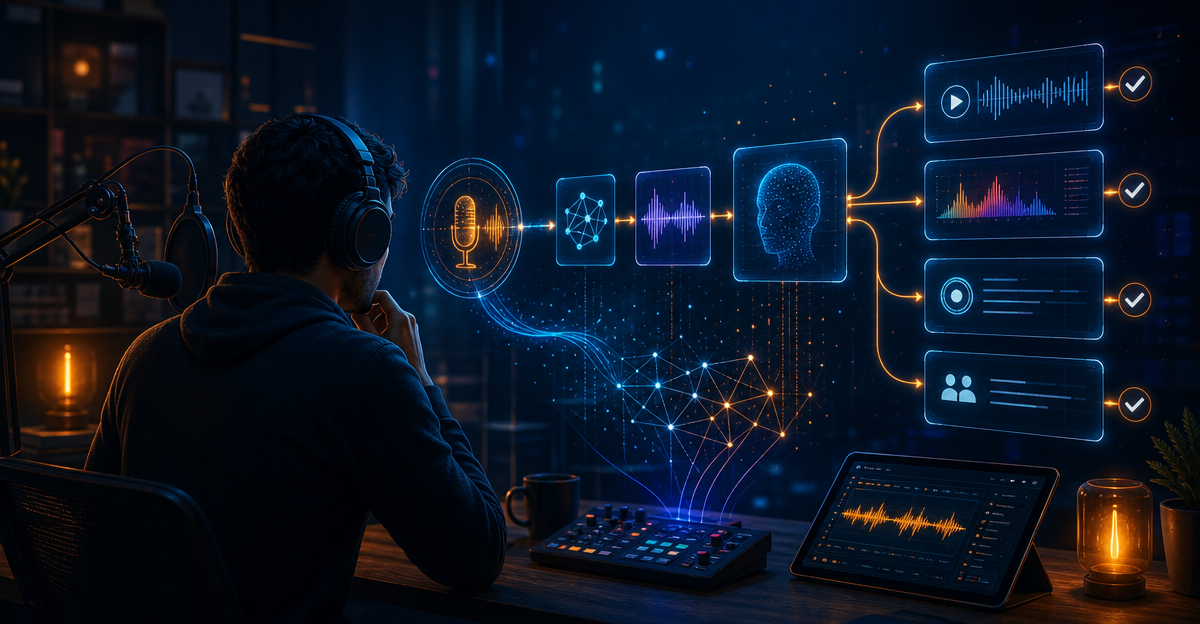
Voice cloning as a line-replacement and correction tool is ready for podcasters who record in a controlled environment, have a consistent vocal delivery, and are currently losing more than two hours per month to re-recording sessions. That is a specific enough profile that most podcasters reading this will know immediately whether it fits. If your recording setup is inconsistent — different microphones across episodes, variable room acoustics, heavy post-processing — the generated voice corrections will not match your source material closely enough to be invisible, and invisible is the only standard that matters.
The translation workflow is ready for podcasters in English-language categories with documented Spanish or Portuguese audience demand. The bar for quality is lower in translated content because listeners are not comparing the clone to a familiar original. That asymmetry works in the podcaster’s favour and makes translation the strongest near-term use case for voice cloning at this listener tier.
Who this is for / Who this is not for
If you record in a treated space, speak with a consistent pace and tone, already have a clean vocal model to train on, and have a specific problem — line replacement, translation, or short-form clip generation — voice cloning is a stack addition that will pay back the setup time within two to three months of active use. Add ElevenLabs, build your file management system first, disclose in your show notes, and run the translation experiment on your three highest-performing episodes.
If you are recording in a variable environment, are still developing your on-mic voice, or are hoping that voice cloning will allow you to produce more episodes without more recording time — do not add this now. The sentence-transition uncanny valley will surface in your audio before the workflow benefit surfaces in your schedule. Wait for the next product cycle, when emotional arc modelling is stronger and the gap between generated and recorded audio is harder to detect. The tool is not finished for that use case yet, and using it before it is ready will cost you listener trust that takes longer to rebuild than the time you were trying to save.
For more on building a tool stack that removes friction rather than adds it, see our guide to AI tools for independent podcasters that covers the full production workflow from recording to distribution.
✍️ Optimize Your Content with NeuronWriter
The SEO tool that helps you hit top rankings with data-driven content scoring.
🎙️ AI Voice Generation with ElevenLabs
The most realistic AI voice generator for creators and podcasters.