
Voice cloning technology can reproduce your cadence, your pauses, even the specific way you trail off at the end of a sentence — but it cannot reproduce the reason your audience decided to trust you in the first place.
Voice cloning for podcasters is not a new microphone upgrade or a better editing shortcut. It is a decision about what your show actually is — and right now, the industry is working very hard to make sure you never frame it that way.
The reason voice cloning is suddenly everywhere has nothing to do with creator demand — it’s a supply chain problem platforms are solving on your behalf
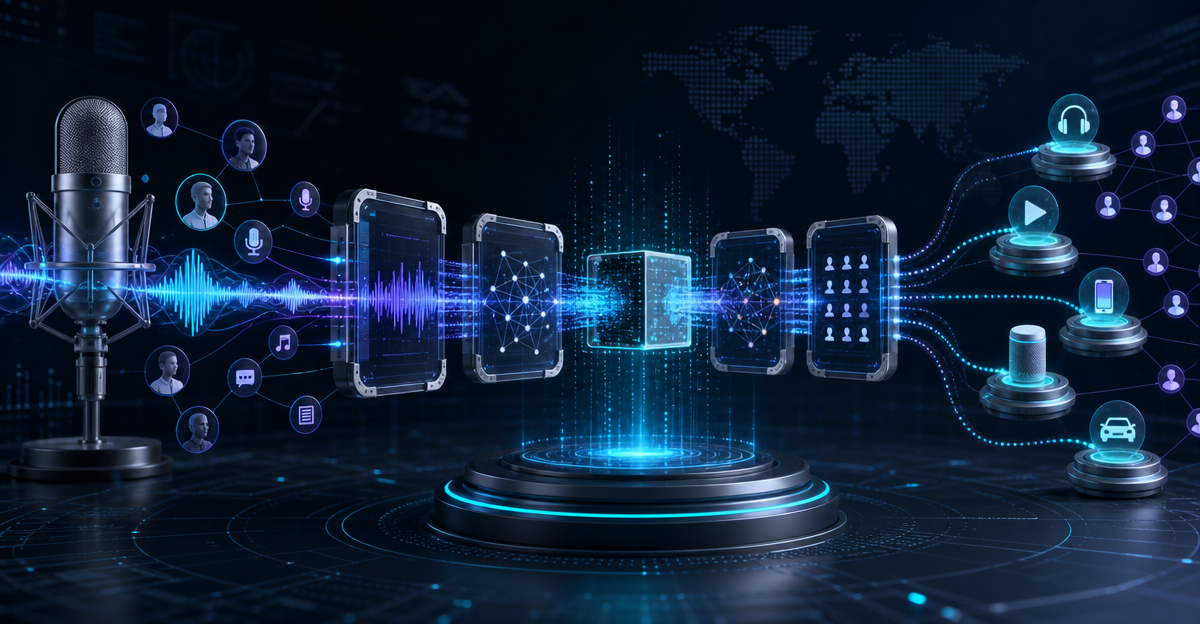
Streaming platforms and podcast networks do not have a creator shortage. They have a content density problem. Their recommendation algorithms require volume to function — more episodes, more ad slots, more inventory to surface and monetize. When a host publishes once a week, the algorithm has very little to work with.
Voice cloning solves that problem at the platform level, not the creator level. A cloned voice can generate translated versions, fill promotional slots, produce bonus content between seasons, and read sponsor copy without the host ever touching a microphone. The platform gets inventory. You get framed as innovative.
The practical implication here is simple: before you agree to any cloning arrangement proposed by a network, distributor, or sponsor, ask one question — who controls when and how the clone is deployed? If the answer is not unambiguously you, you have already transferred the most valuable part of your show.
What podcasters who adopted early actually lost — not in audio quality, but in the relationship their audience thought they had
The creators who moved fastest on voice cloning in the early wave consistently report the same pattern: listeners did not notice the audio difference. What some of them noticed — slowly, across weeks — was a feeling they could not immediately name. The show felt slightly less alive. Responses to community posts became thinner. The sense that someone was actually home behind the microphone had quietly degraded.
This is not a technical failure. It is a relational one. Podcast audiences, particularly those built over two to four years, have developed what researchers at the Nielsen Norman Group have documented as parasocial relationships — bonds that feel genuinely mutual even though they are one-directional. Those bonds are built on the implicit contract that a real person made a real choice to show up and say something. A clone does not fulfill that contract, even when it sounds identical.
The action this section demands is concrete: go back and read your last fifty listener emails or DMs. Count how many of them reference a specific moment of vulnerability, spontaneity, or uncertainty in your voice. Those are the moments a clone cannot generate — and they are also the moments your audience considers the most valuable content you produce.
The double-edged sword is real, but the two edges are not equal — one cuts you once, the other keeps cutting
The honest case for voice cloning is narrow but real. Using your voice to translate an episode into Spanish for an underserved audience who already wants your content — that is one cut, made once, with a clear and bounded benefit. You expand reach without misrepresenting presence.
The other edge is using your clone to read sponsor copy you did not write, fill ad slots in episodes you did not record, or produce content at a volume that signals to your audience that you are more prolific than you actually are. That edge does not cut once. Every new deployment widens the gap between who your audience thinks they are listening to and who is actually in the room.
The distinction matters practically because sponsors will almost always push toward the second edge. The ask will arrive framed as efficiency — more touchpoints, better completion rates, higher CPM. Understanding how AI tools get positioned versus how they actually perform is exactly the skill that separates creators who use these technologies from creators who get used by them.
Why the authenticity recession happening across all creator content makes your unclonable voice more valuable now, not less
Across every content category — newsletters, YouTube, short-form video — audiences are developing a sharper instinct for when they are being processed rather than spoken to. The pattern is visible in comment sections, in subscriber churn timelines, and in the creator communities where people increasingly describe the content they consume as feeling hollow without being able to say exactly why. The signal is not subtle anymore.
Your voice clone is, by definition, a processed version of you. It is your voice stripped of the one thing that makes it worth cloning: the unpredictable human operating behind it. As cloned audio becomes more common, the contrast with uncloned audio becomes more audible — not technically, but emotionally. Scarcity is doing its usual work.
The practical implication is this: the two to four years you have spent building audience trust are not a sunk cost to be monetized through scale. They are current equity that compounds specifically because you did not automate them. Protecting that equity now, when the pressure to clone is loudest, is a stronger business decision than any distribution deal a voice platform can offer you.
The decision framework no one is offering: when voice cloning serves your audience versus when it just serves your output numbers
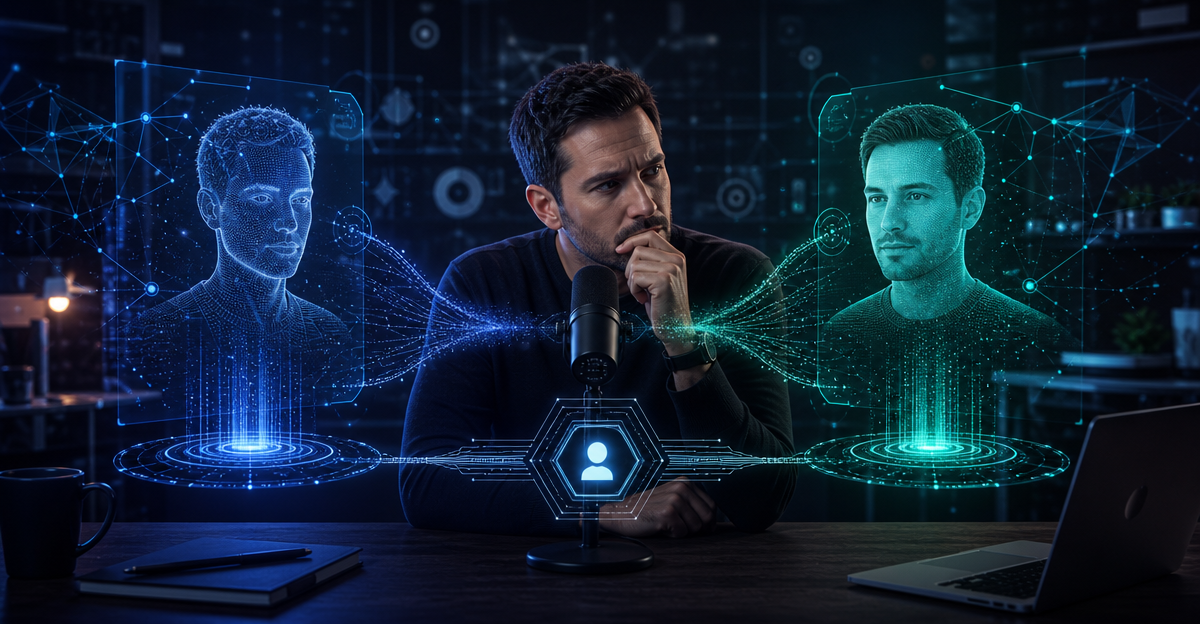
Before accepting or refusing any voice cloning use case, run it through a single test with two parts. First: does this deployment put your voice somewhere your audience would expect to find you, delivering something they already wanted from you? Second: if this listener knew the voice was generated and not recorded by you in the moment, would they feel informed or deceived?
Translation passes both parts. Dynamically inserted ad reads you never approved do not pass either. Cloned bonus content framed as your own reflection on a topic you never actually reflected on fails the second part completely — not because of the audio, but because of the implied claim.
The reason you now have a clear basis to say no — not just a gut feeling — is that you can name the specific contract your clone would be breaking: the implicit promise that when your voice is present, your judgment was present too. That is not a philosophical position. It is the actual product your audience has been paying attention to for years, and it is the one thing no cloning platform has figured out how to manufacture without you.