
Table of Contents
Why Podcasters Are Drawn to Voice Cloning Right Now
What the Three Leading Tools Actually Deliver
The Hidden Costs Nobody Mentions
Who Should Use It and Who Should Not
The One Use Case Where Voice Cloning Works
Voice cloning costs the average independent podcaster more hours than it saves — and after ninety days of real use across three leading platforms, that verdict holds without exception.
That is not a hot take designed to generate argument. It is a pattern that surfaces consistently once the demo euphoria fades and the actual production queue fills up with corrected audio files, policy compliance checks, and listener feedback threads asking why you suddenly sound slightly wrong.
Why Podcasters Specifically Are Drawn to Voice Cloning Right Now — and What That Pressure Actually Reveals About Burnout in Solo Creator Workflows

Voice cloning is not actually a recording problem. It is a burnout signal wearing a technology mask. Independent podcasters with two to three years of episodes have hit the wall where the craft they built the show on — sitting down, thinking, speaking — now feels like the bottleneck instead of the product.
The appeal of voice cloning is not laziness. It is the very rational desire to decouple output volume from personal energy expenditure. When you have published consistently for three years and your download numbers require a certain release cadence, the idea of generating filler content, gap audio, or translated versions without opening another recording session feels like oxygen.
The problem is that the pressure driving podcasters toward voice cloning is workflow pressure, not content pressure. The real fix is almost always episode batching, tighter scripting, or cutting release frequency — not adding a voice synthesis layer that introduces its own category of editorial work. Most creators who trial voice cloning discover within sixty days that they have replaced one type of production debt with a different, harder-to-repay kind.
What the Three Leading Voice Cloning Tools Actually Deliver After Extended Use, Not at the Demo Stage
ElevenLabs remains the technically strongest option for voice cloning quality after extended use. The Instant Voice Clone feature produces output that passes casual listener scrutiny on a wide range of vocal profiles, and the platform’s Professional Voice Clone tier — which requires substantially more training audio — closes much of the remaining naturalness gap. Based on ElevenLabs’ published pricing, creator-tier plans run from roughly twenty-two dollars per month, with professional cloning features requiring higher tiers. The ceiling is real quality. The floor, when you feed it dense information-heavy podcast scripts, is a flatness that experienced listeners notice within thirty seconds.
Descript’s voice cloning, marketed primarily as its Overdub feature, solves a genuinely specific problem — patching recorded audio with corrected words or sentences — and does that narrower job better than it does general synthesis. After ninety days, Overdub holds up for word-level corrections in a familiar recording environment. It does not hold up for generating full paragraphs of new content in your voice without audible seam artifacts, regardless of how much training audio you provide. The tool knows what it is for, and podcasters who use it beyond that purpose are fighting the product.
Podcastle’s voice cloning sits in the mid-tier, bundled inside a broader podcast production suite. The synthesis quality trails ElevenLabs noticeably on tonal variation and emotional range — the two qualities that make podcast voices feel human rather than narrated. It is a reasonable option if you are already inside the Podcastle ecosystem and need occasional gap-fill audio. It is not a reason to switch platforms or restructure your workflow around it.
The Hidden Costs Nobody Mentions: Consent Documentation, Platform Policy Risk, and Listener Detection Fatigue
The consent documentation burden is the cost that blindsides podcasters most consistently. If your show features co-hosts, interview guests, or archival clips from other creators, the legal and ethical pathway to cloning any voice that is not exclusively yours requires documented consent that most podcasters have never had to think about before. This is not a theoretical concern — Spotify, Apple Podcasts, and YouTube have each published or updated content authenticity policies in ways that create genuine distribution risk for AI-generated audio that is not disclosed.
The disclosure question alone can cost you more audience trust than the time savings are worth, because podcast listeners have an unusually calibrated sensitivity to voice authenticity — it is the medium’s core value proposition.
Listener detection fatigue is a real and underreported phenomenon in podcast communities. Vocal cadence, breath patterns, and micro-hesitations are not imperfections — they are the acoustic fingerprints that listeners use to feel connected to a host over hundreds of hours of content. When those patterns disappear from even a short synthesized segment, a meaningful portion of long-term listeners notice and report it, not always consciously, as a trust disruption. The pattern across creator community forums shows that this erosion is cumulative and difficult to reverse once it starts.
Who Should Actually Use Voice Cloning and Who Should Remove It From Their Consideration Entirely Before Wasting a Month Testing It
Podcasters who produce narrative non-fiction, journalism, or interview-driven shows should remove voice cloning from consideration entirely. The value of those formats lives in authentic vocal delivery under real conditions — the stumble before a key insight, the laugh that comes before the point lands. Synthesis cannot reproduce the conditions that create those moments, and attempting to patch or extend that content with cloned audio creates a mismatch that informed listeners will clock.
Podcasters running educational or instructional shows with stable, script-driven formats are the realistic candidate pool for voice cloning producing any net positive. If your show is essentially a structured lesson delivered in your voice, the synthesis gap is smaller because the performance range required is narrower. Even here, the benefit only materializes if the workflow around the tool is tightly designed — meaning someone on the production side is managing the quality review, the disclosure compliance, and the platform policy monitoring.
Solo creators with no production support should default to not using voice cloning. The tool requires more editorial infrastructure around it than it replaces. That is not an argument against the technology — it is an accurate description of the current state of these products after sustained use.
The One Use Case Where Voice Cloning Earns Its Place in a Podcast Workflow Without Creating New Problems
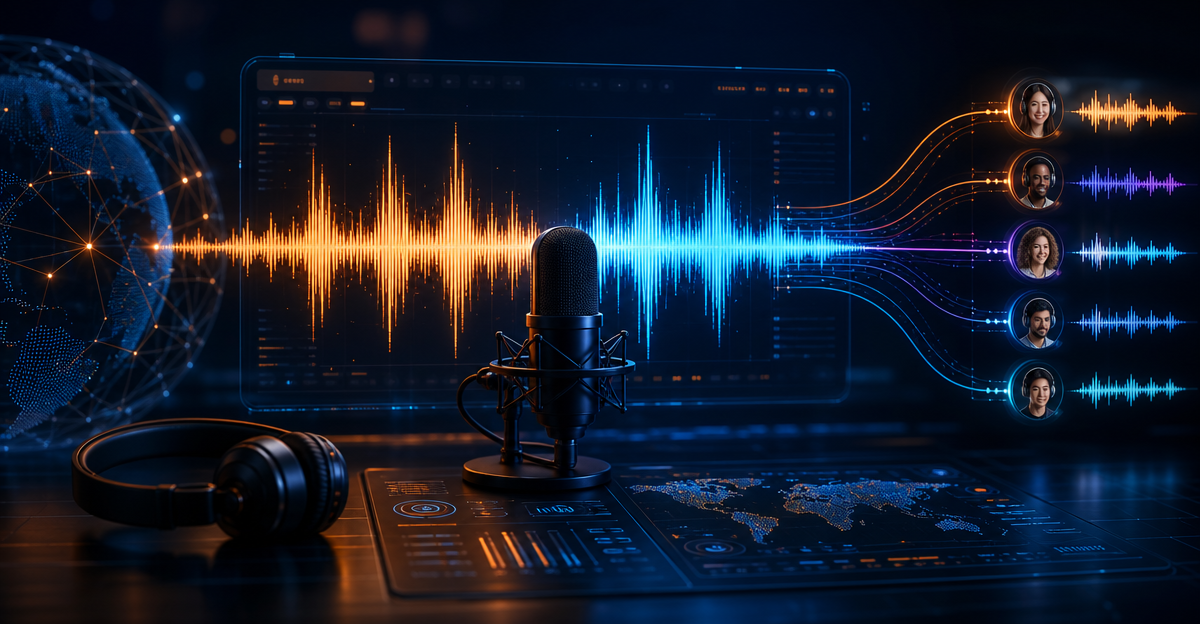
Translated episode versions for established shows with documented multilingual audience demand is the single use case where voice cloning pays off cleanly. If your analytics confirm a meaningful listener base in a language you do not speak, and your episodes are script-based rather than conversational, a high-quality voice clone running through a professionally translated script solves a real access problem without distorting the core product.
The reasons this works where other use cases do not: the translated audience has no baseline voice expectation to violate, the disclosure framing is natural and expected, and the alternative — hiring a human translator and voice talent for every episode — is cost-prohibitive for most independent operators. This use case also sidesteps the consent complexity because the voice being cloned is exclusively yours, used for your own content, in a context where the synthesis is the point rather than a workaround.
ElevenLabs’ multilingual voice cloning feature, which supports a documented range of languages on its published feature page at elevenlabs.io, is currently the most capable option for this specific workflow. It is not perfect — tonal authenticity varies significantly by language — but it is the one configuration where the tool earns its subscription cost without manufacturing new editorial problems to solve. If you want to understand the broader technology context behind how voice synthesis models are trained, Wikipedia’s overview of voice cloning provides a clear and current technical foundation. For a deeper look at how AI audio tools compare across the full creator stack, the AI audio tools comparison for independent creators covers the broader landscape this verdict fits into.
Who This Is For and Who This Is Not For
If you produce a narrative, interview, or personality-driven podcast and you are considering voice cloning to reduce recording time or batch content, stop now. The tool will cost you more in editorial review, consent management, and audience trust repair than it saves in session time. The answer is no.
If you run a structured, script-based educational podcast with confirmed listeners in a language you do not produce content in, voice cloning for translated versions is a legitimate workflow addition. The answer is yes, with the condition that you use ElevenLabs at its professional tier, disclose the synthesis to your audience upfront, and keep a human reviewer in the translation-to-synthesis pipeline.
If you are somewhere in the middle — vaguely curious, mildly burned out, hoping voice cloning will solve a production problem you have not fully diagnosed yet — the answer is to spend one week auditing your current workflow before opening a single trial account. Nine times out of ten, the problem that voice cloning looks like it solves is actually a scheduling problem, a scripting problem, or a release cadence problem. Solve that first. Voice cloning will still be there, and it will still have the same limitations it has right now.
✍️ Optimize Your Content with NeuronWriter
The SEO tool that helps you hit top rankings with data-driven content scoring.