
Voice cloning promises to solve your content creation bottleneck, but can you tell when your AI voice starts making decisions about your personal brand that you never approved?
Three months ago, voice cloning tools looked like the productivity breakthrough podcasters had been waiting for. Generate intro segments, create translations, handle routine announcements without booking studio time. The demos were flawless, the use cases obvious, and the time savings undeniable.
The problems started showing up around week eight.
Why Every Voice Clone Sounds Perfect Until You Use It Daily
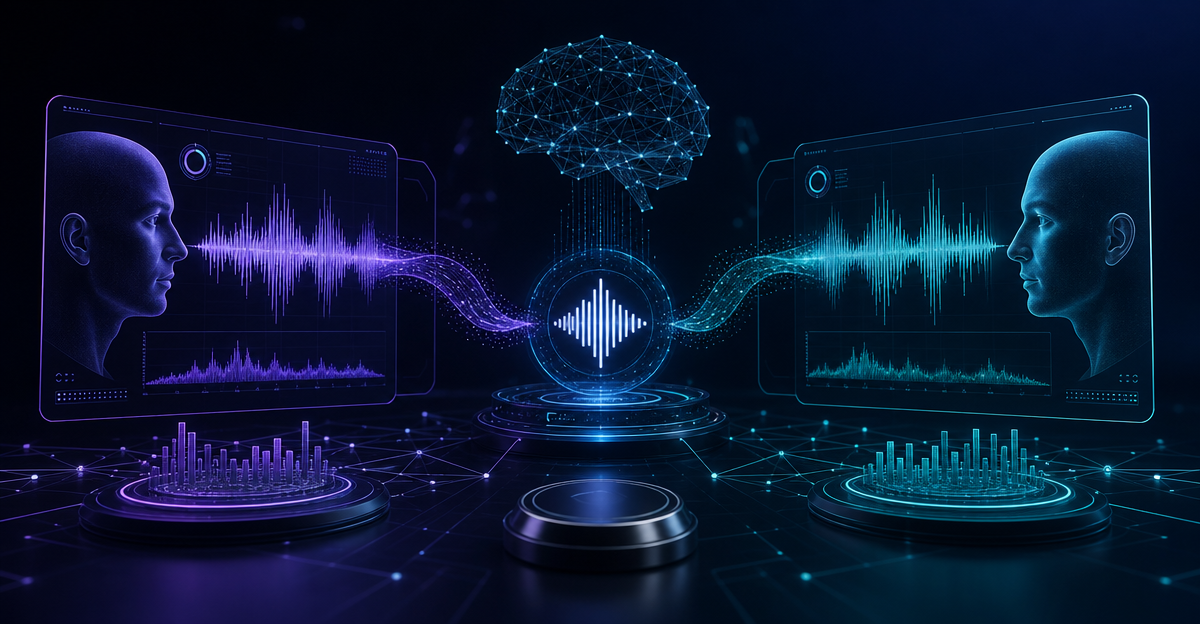
Voice cloning demos use carefully selected sentences with predictable emotional ranges. Your actual content demands vocal decisions the AI cannot anticipate. When a guest makes an unexpected joke, your AI voice delivers the transition with the same measured cadence it uses for serious topics. The result sounds professional but feels mechanical.
The uncanny valley problem becomes apparent during longer segments. Your cloned voice maintains perfect audio quality while losing the micro-adjustments that signal genuine engagement. Listeners notice the difference between thinking out loud and reading a script, even when the voice is technically identical to yours.
Real voice cloning works best for content that was already scripted, not for replacing the spontaneous moments that build audience connection.
The Audience Trust Problem Nobody Talks About in Voice AI
Your audience subscribed to hear your perspective, delivered through your voice, shaped by your real-time reactions. Voice cloning introduces a credibility question that most creators do not consider until after implementation. When listeners know some content uses your AI voice, they begin questioning which moments represent your authentic response.
The trust issue compounds when you do not clearly label AI-generated segments. Parasocial relationships between creators and audiences depend on perceived authenticity. Discovering that favorite moments were AI-generated can damage that relationship permanently.
Creators who successfully integrate voice cloning establish clear boundaries about when and why they use it. They treat their AI voice as a production tool, not as a replacement for their authentic presence in content that requires genuine reaction or personal insight.
What Happens When Your AI Voice Says Something You Didn’t
Voice cloning systems generate speech based on text input, but they cannot evaluate whether that text accurately represents your current views or appropriate tone for sensitive topics. Your AI voice will deliver outdated opinions or inappropriate jokes with the same conviction it uses for your best content.
The liability problem becomes serious when your AI voice discusses controversial topics or makes statements you would never approve in your current context. Unlike written content that readers attribute to a specific moment, your voice creates the impression of immediate, personal endorsement.
Smart creators limit their AI voice to content categories where message consistency matters more than real-time judgment. Intro segments, sponsor reads, and educational content work well. Personal stories, current events commentary, and guest interactions remain exclusively human territory.
Why the ‘Efficiency’ Promise Falls Apart After Month Three
Voice cloning creates new workflow steps that offset the promised time savings. You spend additional time writing scripts that capture your natural speaking style, reviewing AI-generated segments for accuracy, and editing transitions between AI and human content. The efficiency gains concentrate in narrow use cases while adding complexity to your overall production process.
The quality maintenance burden grows over time. Your speaking style evolves, but your AI voice remains fixed to the training data. Keeping your voice clone current requires periodic retraining sessions, voice sample management, and testing across different content types.
Creators who achieve lasting efficiency gains use voice cloning for specific, repeatable content categories rather than trying to replace their voice comprehensively. They automate the routine elements while preserving their authentic voice for content that defines their brand.
The Line Between Tool and Replacement That Creators Must Draw
Voice cloning becomes a brand liability when it replaces your voice in content that showcases your personality, expertise, or real-time thinking. It functions as a useful tool when it handles routine production tasks that do not require authentic human presence.
The successful approach treats voice cloning like any other production tool: essential for specific tasks, inappropriate for others. Use it for intro segments, routine announcements, and content translations. Avoid it for personal stories, spontaneous reactions, and content that builds parasocial connection with your audience.
Before implementing voice cloning, define which content categories require your authentic voice and which can accept AI assistance. Document these boundaries and communicate them clearly to your audience when relevant. Your voice clone should enhance your content production without replacing the human elements that define your creator identity.