
What you will know after reading this
Whether ElevenLabs or Murf fits your actual production workflow — not in theory, but based on the type of content you make and how often you make it. You will know which tool handles voice cloning seriously and which one is built for polished, templated voiceover. You will leave with a specific answer for your creator type, not a shrug.
If you produce video content, podcasts, or courses more than a few times a month, ElevenLabs will give you more realistic output than Murf — but Murf will give you a faster, less frustrating path to a finished file. That distinction matters more than any feature list, and the rest of this piece will show you exactly where each tool earns it.
What Each AI Voice Tool Is Actually Built For
ElevenLabs was built by people who were obsessed with making AI voice sound like a real human was in the room. Murf was built to help non-technical teams produce clean, professional voiceover without hiring anyone. Those are genuinely different goals, and both tools reflect their origins in ways you feel the first time you use them.
ElevenLabs gives you a text editor where you paste your script, pick a voice, and render. The voice quality at default settings is the best I have tested at this price range — the pacing, the breath patterns, the slight tonal variation between sentences. Murf gives you a full production studio inside your browser, with slide sync, background music layering, and a team collaboration dashboard. It is more polished as a product experience and considerably more limited as a voice engine.
The honest framing is this: ElevenLabs is a voice tool that happens to have a usable interface. Murf is a production tool that happens to have decent voices. Which one you need depends entirely on whether the voice itself is your product or just one ingredient in it.
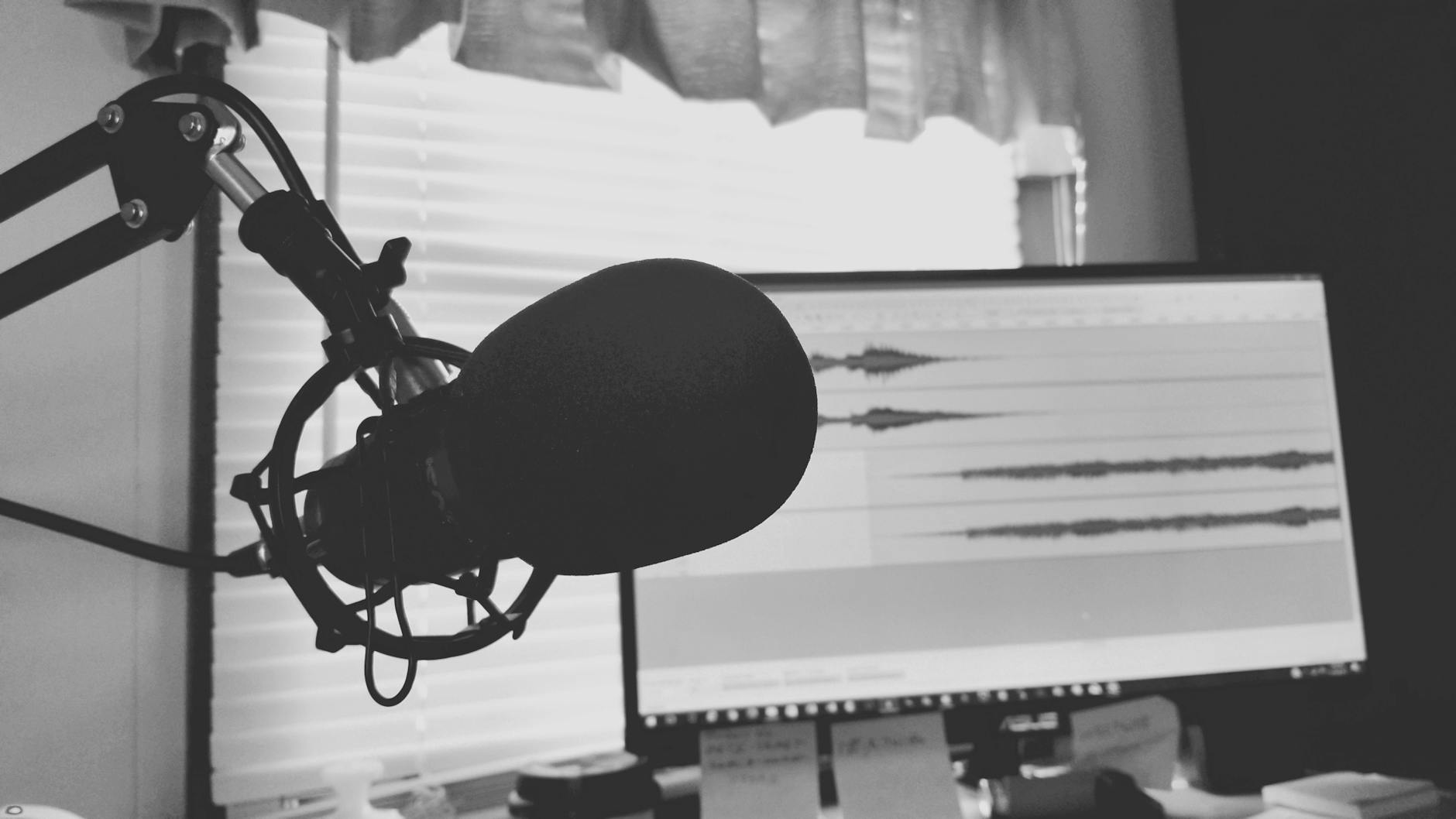
AI Voice Quality and Cloning Compared Directly
ElevenLabs is the clearest leader here and it is not particularly close. Their base voice library sounds natural in a way that still surprises me when I run fresh tests. The emotional range — the way a sentence can land with weight or lightness depending on the punctuation and phrasing you feed it — is something Murf has not matched. When I ran identical scripts through both tools using comparable voice styles, ElevenLabs output required zero manual adjustments. Murf output required me to go back and manually insert pauses and tweak emphasis on roughly one in four sentences.
ElevenLabs voice cloning — where you upload a sample of your own voice and it replicates it — is the single most practically useful feature in this entire comparison.
Murf offers voice cloning on its Enterprise plan, which starts at pricing they do not publish publicly and requires you to book a call. ElevenLabs offers voice cloning starting at their Starter tier, which runs $5 a month. If voice cloning is relevant to your work at all — and for any creator who has an established on-camera presence, it absolutely should be — ElevenLabs wins this category by default on price and access alone.

Pricing Structure and What You Actually Get Per Dollar
ElevenLabs charges by character, not by minutes of audio. Their free tier gives you 10,000 characters per month, which is roughly five to eight minutes of finished audio depending on your script density. The Starter plan at $5 a month moves you to 30,000 characters. The Creator plan at $22 a month gives you 100,000 characters and unlocks commercial licensing. Those are real numbers you can plan against.
Murf prices by the hour of audio output. Their free plan gives you 10 minutes, which is basically nothing. Their Basic plan at $19 a month gives you 24 hours of voice generation annually — that sounds like a lot until you realize it resets yearly, not monthly, and heavy users burn through it in weeks. Their Pro plan at $26 a month per user gives you unlimited voice generation, which is where Murf actually becomes viable for regular production work.
If you are producing content at volume, ElevenLabs is cheaper until you hit their higher tiers. If you are producing sporadically — one or two pieces a week, not every day — Murf’s unlimited Pro plan removes the mental overhead of tracking character counts. Neither pricing model is inherently bad, but ElevenLabs rewards power users and Murf rewards occasional ones.

Workflow Integration and Where Each Tool Slows You Down
Murf’s studio interface is genuinely well designed. You can upload a presentation, sync voice to slides, adjust timing visually, and export a finished video with your voiceover baked in — all without leaving the browser. For someone producing online course content or explainer videos without a dedicated editor, that is a real time save. I have used it for slide-based content and the workflow is clean enough that I did not resent it.
ElevenLabs has an API that developers and serious production setups actually use. For a solo creator without technical resources, the API is irrelevant — but the Projects feature, which lets you manage long-form audio generation chapter by chapter, is genuinely useful for podcast producers and audiobook creators. The interface is spartan. You will not mistake it for a polished SaaS product. But it does not get in the way of the output, which is what matters when you are working fast.
The place ElevenLabs slows you down is post-generation editing. If you render a 10-minute script and one sentence sounds wrong, you regenerate that sentence separately and stitch it manually. Murf has inline editing where you can tweak a single line and re-render just that section inside the timeline. For creators doing frequent revisions — anyone working with client feedback, anyone iterating on scripts — Murf’s editing workflow saves real time. That is the one category where I give Murf a clear operational advantage.

Voice Library Depth and Language Support
ElevenLabs offers over 3,000 voices in their library, including community-created and shared voices from their Voice Design and Voice Library features. The range of accents, ages, and tonal styles is wide enough that I have never had a project where I could not find something workable within five minutes of browsing. Their multilingual model covers 29 languages and the quality holds up across Spanish, French, and German in my own tests — though I cannot personally verify every language they list.
Murf has around 120 voices across 20 languages. The voices are curated rather than crowd-sourced, so there is less variation and less noise. If you need a very specific accent or a voice with a particular personality, you will hit the ceiling faster with Murf. If you need a clean, neutral professional voice in English and you want it reliably, Murf’s library is fine for that use case.
The multilingual gap matters if you are producing content for non-English audiences. ElevenLabs is the only realistic choice for creators doing volume work in multiple languages. Murf works for English-primary creators who occasionally need another language and are not picky about regional accent accuracy.

Comparison at a Glance
| Feature | ElevenLabs | Murf |
|---|---|---|
| Voice realism | Best in class at this price | Good, not exceptional |
| Voice cloning access | From $5/month | Enterprise only |
| Entry price | Free / $5 Starter | Free / $19 Basic |
| Inline script editing | No — re-render required | Yes — line-level edits |
| Slide and video sync | No | Yes |
| Voice library size | 3,000+ | ~120 |
| Languages supported | 29 | 20 |
| API access | Yes, all paid plans | Yes, Pro and above |

Who Should Choose Which AI Voice Tool
If you are a blogger or solo content creator adding voiceover to YouTube videos, short-form clips, or a podcast — ElevenLabs is the call. The voice quality is better, the price starts lower, and voice cloning at $5 a month means you can build a consistent audio identity across everything you produce. The stripped-down interface will not bother you once you have run two or three projects through it.
If you are a freelancer producing course content, explainer videos, or client deliverables where you need to sync audio to slides, make quick revision turns, and hand off clean files without using external editors — Murf is worth the $26 Pro price. The production studio saves you tool-switching time that adds up fast when a client sends three rounds of script changes on a Friday afternoon.
If you run an agency producing voiceover at scale across multiple clients and languages, ElevenLabs is the infrastructure choice. The API, the voice cloning pipeline, and the multilingual model depth are built for volume in a way Murf simply is not. Murf is a seat-licensed team tool; ElevenLabs is a production engine. Those are different things, and an agency that tries to run high-volume multilingual work through Murf will feel that ceiling within the first month.

✍️ Optimize Your Content with NeuronWriter
Want to rank higher on Google? Try NeuronWriter — the AI-powered SEO writing tool we use to optimize every post.