
Spotify’s AI voice ban actually protects independent podcasters from the biggest content trap they never saw coming.
The streaming giant’s new verification requirements and explicit prohibition of AI-generated voices hit the podcasting community in October 2026. Most creators saw this as platform overreach limiting their creative tools. After three months of watching how this plays out, the opposite is true.
The ban forces podcasters to focus on what actually builds audiences instead of chasing synthetic shortcuts that were already failing.
What Spotify’s New Rules Actually Mean for Your Show
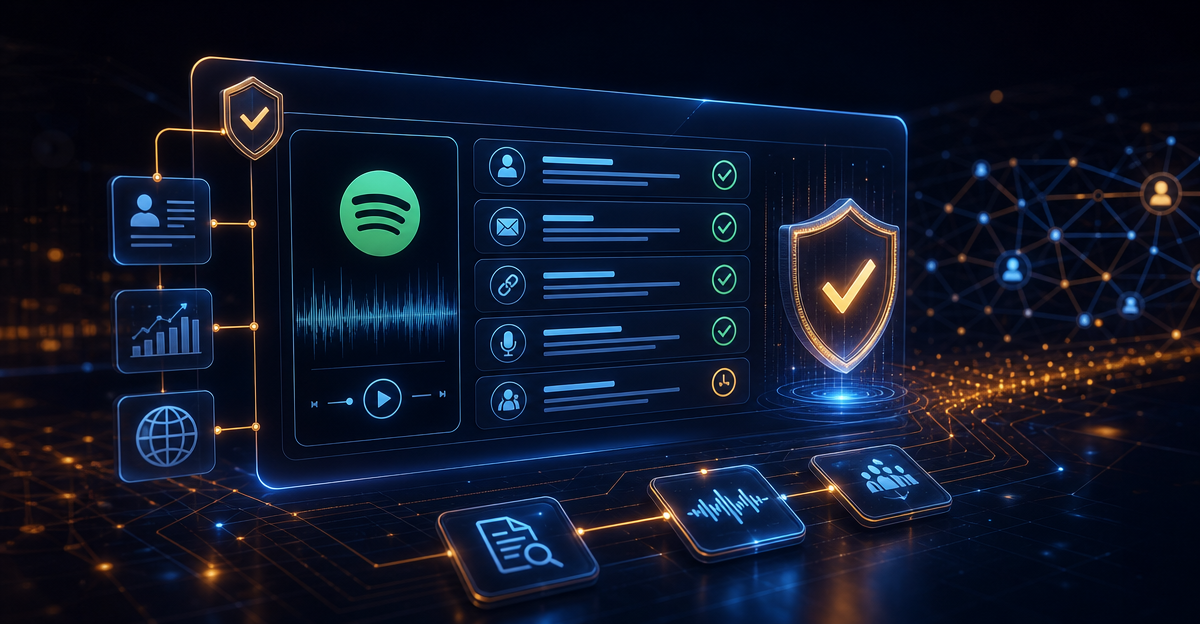
Spotify now requires human voice verification for podcast monetization and prominent placement in their algorithm. Shows using AI voices get automatically flagged and removed from revenue programs.
The verification process scans uploaded audio for synthetic voice patterns using the same detection technology that flagged deepfake content on social platforms. If your show gets flagged, you lose access to Spotify Ad Studio and exclusion from curated playlists.
This creates a two-tier system where verified human voices get priority distribution while AI content gets buried in search results.
The policy extends beyond obvious voice cloning. Text-to-speech narration, even high-quality services like Murf or Speechify, triggers the detection system. Spotify’s algorithm cannot distinguish between “good” and “bad” AI voices — it blocks them all.
Independent podcasters with 500-5000 downloads per episode sit in the worst position. They lack the resources for professional voice talent but depend on Spotify’s discovery algorithm for growth. The platform essentially forces a choice between authenticity and automation.
Why Voice Cloning Was Never the Right Solution Anyway
Voice cloning tools promised to solve the wrong problem for podcasters. The issue was never recording time — it was having something worth saying.
Most podcasters who tried AI voices used them to create more episodes, not better episodes. This flooded their feeds with synthetic content that listeners could detect within 30 seconds. Engagement rates dropped consistently across shows that switched to AI narration.
The technology itself created new problems. AI voices cannot handle spontaneous reactions, genuine emotion, or the natural speech patterns that make podcasts intimate. Listeners tune in for human connection, not perfect pronunciation.
Voice cloning also trapped creators in a content treadmill. Instead of developing their natural speaking voice and interview skills, they outsourced the core skill that defines successful podcasters. This made them dependent on tools instead of building authentic audience relationships.
The creators who saw the biggest growth during the AI voice trend were those who doubled down on their human voice while competitors went synthetic. They gained market share by being more authentic, not more automated.
The Real Tools Podcasters Should Use Instead of AI Voices
Smart podcast automation focuses on everything except the voice. The tools that actually save time handle editing, show notes, and distribution — not narration.
Descript remains the best editing solution for independent podcasters. Its overdub feature can fix individual words without regenerating entire segments, staying within Spotify’s guidelines. The tool handles filler word removal and audio cleanup while preserving natural speech patterns.
For content preparation, Claude and ChatGPT excel at research and outline creation. They help organize thoughts before recording, reducing the need for extensive post-production. This approach maintains authentic delivery while streamlining preparation time.
Automated transcription through services like Otter.ai or Rev.ai generates show notes and social media clips from existing recordings. These tools multiply content reach without creating synthetic audio that violates platform guidelines.
Distribution automation through services like Anchor or Podcast One handles the technical aspects of multi-platform publishing. This saves hours per episode while keeping human voices at the center of content strategy.
How to Build Audience Trust Without Verification Badges
Verification badges matter less than consistent audience engagement. Podcasters can build trust through transparency about their process and regular interaction with listeners.
Direct audience communication through email newsletters or Discord communities creates stronger connections than platform-dependent verification systems. These owned channels let creators maintain relationships regardless of algorithm changes.
Consistency in publishing schedule and audio quality signals professionalism to both listeners and platforms. Regular uploads with stable audio levels get better algorithmic treatment than sporadic high-production episodes.
Guest interviews and audience Q&A segments prove human authenticity better than any verification badge. These formats require real-time thinking and genuine interaction that AI cannot replicate convincingly.
Cross-platform presence on YouTube, Twitter, and LinkedIn reinforces human identity. When listeners can see the person behind the voice across multiple channels, trust builds naturally without requiring platform verification.
Which Platforms Still Allow AI Voice Content
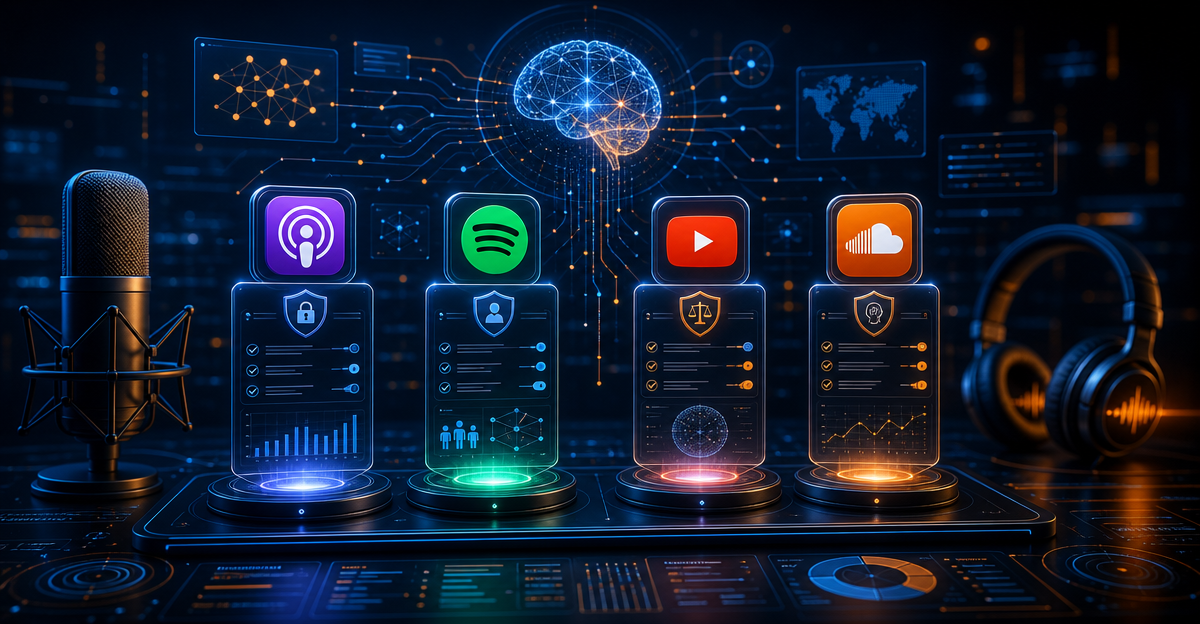
YouTube remains the most permissive platform for AI voice content, requiring only disclosure in video descriptions. Creators can monetize synthetic voices as long as they clearly label AI-generated segments.
Apple Podcasts has no explicit AI voice ban, but their editorial team manually reviews shows for Apple Podcasts Spotlight features. Human-voiced shows get priority for featured placement and category recommendations.
Google Podcasts allows AI voices but ranks them lower in search results. The platform’s algorithm favors engagement metrics, and synthetic voices consistently generate fewer comments and shares than human narration.
Smaller platforms like Castbox and Podcast Addict have no AI restrictions, making them viable for creators who want to experiment with voice technology. However, their smaller audiences limit growth potential compared to major platforms.
The pattern across platforms shows a clear preference for human voices in algorithmic ranking, even when AI content is technically permitted. Creators choosing AI voices sacrifice discoverability for production convenience.
Who this is for: Independent podcasters with existing audiences who want to maintain growth on major platforms should avoid AI voices entirely and focus on human-centered automation tools.
Who this is not for: Creators planning to build podcasting businesses around AI voice technology will find severely limited monetization opportunities on the platforms that matter most for audience growth.
✍️ Optimize Your Content with NeuronWriter
The SEO tool that helps you hit top rankings with data-driven content scoring.
🎙️ AI Voice Generation with ElevenLabs
The most realistic AI voice generator for creators and podcasters.